Outwardly Religious

Outwardly Religious

The prophet Jeremiah spent decades of his life sharing the Words of God to an outwardly religious Israel/Judah.  The people to whom he was prophesying were a people that had been chosen of God.  They were chosen as a promise to Abraham that through Him “all the families of the earth shall be blessed”.  Jesus the Savior of all mankind would come through the lineage of Abraham.  The descendants of Abraham, the Israelites/Hebrews were enslaved by the nation of Egypt.  They originally came to that state as a family of 70 but grew under their bondage.  God through Moses delivered the people and brought them to Mt. Sinai of Arabia.  There they were told by God, “If you will indeed obey my voice and keep my covenant, you shall be my treasured possession among all peoples, for all the earth is mine; and you shall be to me a kingdom of priests and a holy nation.”  God then brought them to the land of Canaan as He had promised Abraham.  Before entering, Moses shared with them these words, “This day the Lord your God commands you to do these statutes and rules.  You shall therefore be careful to do them with all your heart and with all your soul.”  Moses then shared with them the blessings God would bring upon them if they obeyed and he also shared the curses to come upon them if they disobeyed (Deuteronomy 27/28).  Israel failed in following the commandments of God with all of their heart and soul.  Thus, a disobedient, hard-hearted people set on destruction was the nation to whom Jeremiah would prophecy.

Jeremiah 6:10 – “…the Word of the Lord is to them an object of scorn: they take no pleasure in it.”

Israel, being the nation chosen to be blessed above all others, had a rich history of God’s deliverance and grace.  They built a great temple in Jerusalem which God agreed to acknowledge with His presence.  Nations knew of the might of the God of Israel.  Israel had great and constant sacrifices to God.  Yet, despite the display of their religiousness, most of the people had no love for what God had instructed them or recognition of what he had done for them.  They were a nation of hypocrites and God was about to destroy them by the hand of the Chaldeans led by Nebuchadnezzar.  Jeremiah saw this.  Jeremiah experienced this.  His prophetic words called for their repentance, but the heart and soul devotion spoken of by Moses was not present with these people.

Hypocrites aren’t just a danger to themselves; they are a danger to others.  Their outwardly religious hypocrisy influences others to discount the glory, power, and provision of God.  God will not be mocked by pretend, superfluous religiosity.  God knows what He wants; He knows what He has commanded.  Due to blatant hypocrisy, many people walk away from or avoid religious bodies of people claiming to be God’s faithful.  They see great displays of religion, but little substance regarding the teaching and keeping of the commandments of God.  Studies show that young people recognize this hypocrisy and not being properly instructed in the scriptures or seeing hearts embracing the Word of God, they are walking away from “organized” religion in great numbers.

Acknowledging that the true worshippers of God are abundantly surrounded by hearts which truly have no pleasure in obeying God’s commandments, what is mankind to do?  Walking away is not the answer.  Business is full of hypocrisy, but people keep engaging in it so they can make money.  Society is full of hypocrites, but people rarely leave and become hermits.  Married life has hypocrites, but people keep on marrying.  Heaven is going to be the only place where there will be no hypocrites, but if a person avoids obeying the commandments of God and being part of the Lord’s Church, they will spend their eternity in hell with the hypocrites they tried to avoid.  So true worshippers, such as Jeremiah, continue on in the midst of the hypocrisy, following God’s commands and sharing His Word.  They call for repentance, they call for devotion, they call for the obedience which God commanded.  They do so knowing that many, even most, will not listen, will not turn, and will be destroyed.  In the maelstrom, those truly seeking God, do not turn away from the truth or the love of it, despite the presence of hypocrisy.  The devoted work to change it.  Committed souls may have to dust off their feet from time to time, but they move on, not away from, and steadfastly cling to the Words and commandments of God.

God has chosen the Church which Jesus built (Matthew 16:18, Acts 2:47) as the home of the believer.  He has provided a path that is a light to the feet of those who will follow, “for the ways of the Lord are right, and the just shall walk in them: but the transgressors shall fall therein.”.  In seeking the path of God, do not be distracted by the weak and flailing hearts of others.  Do not turn back when you see others falter or worse yet, relish in their disobedience to God while putting on a show of religious pomp.  “…for he that cometh to God must believe that he is, and that he is a rewarder of them that diligently seek him.”  “Thou shalt love the Lord thy God with all thy heart, and with all thy soul, and with all thy mind, and with all thy strength…” Jeremiah trusted and obeyed God completely.  His devotion was not a show, but it was a labor of love in the midst of an outwardly religious Israel whose hearts had gone cold.  Inside and out, let us keep the fires of our heart burning in service and honor to our God.


Posted in Travis Main | Tagged , , , , , | Comments Off on Outwardly Religious

Confusion in the Scriptures

Confusion in the Scriptures

Confusion is something everyone goes through at some point in their lives.  Whether young or old, we have moments when we just don’t understand what we are seeing or are hearing.  I remember as a boy, I was walking at night toward my house.  There, 60 feet from the house, was a lightning ball.  A lightning ball is exactly what it sounds like.  It is a ball of lightning hovering off the ground, in this case, about three feet above the ground.  My curiosity was electric.  I crept closer and closer to this rare occurrence.  Then, I realized what I had seen as a lightning ball was just light brightly shining off of a large shiny tin container.  My confusion was based on a lack of knowledge about what I was seeing and a predisposition to wanting to see a lightning ball which I had previously read about.  In addition to our lifetime moments, there are a number of occasions within scripture where confusion occurred.

The book of John in chapter 6 retells the history of Jesus to a crowd and his disciples near the sea of Galilee.  Picking up in verse 31 the crowd mentions the Israelites in the wilderness and how they were given bread from heaven to eat.  Jesus declares He is the true bread from heaven.  He is the bread of life.  The people grumbled about his statement.  They certainly understood His claim of Deity.  Jesus declared that “the bread that I will give is my flesh, which I will give for the life of the world… I say unto you, except you eat the flesh of the Son of man, and drink his blood, he have no life in you.  Whoso eateth my flesh and drinketh my blood, hath eternal life.”  By verse 66 it is read, “From that time many of his disciples went back and walked no more with him.”  It appears as if there was confusion in regard to what Jesus wanted from those who would follow Him.  Can you imagine hearing these words firsthand?  Not only is this Jesus claiming Deity but is Jesus talking about cannibalism?  Well, no he wasn’t.  He was speaking of the Lord’s Supper by which Christians would partake of the fruit of the vine and unleavened bread to remember Jesus (I Corinthians 11:23-27).

After his death and resurrection, Jesus instructed the disciples remain in Jerusalem waiting for the promise of the Father which was the baptism of the Holy Spirit.  “When the day of Pentecost arrived… they were all filled with the Holy Spirit and began to speak in other tongues as the Spirit gave them utterance.”  These disciples, the twelve apostles, were telling people from different countries and different languages (tongues) “the mighty works of God”.  What was the response to this?  “And all were amazed and perplexed [confused], saying to one another, ‘what does this mean?’ But others mocking said, ‘They are filled with new wine.’”  This interaction recorded in Acts 2 demonstrates how confusion can occur.  These “Galileans”, men who were not educated in the speaking of different languages, were doing so!  The foolish explanation of drunkenness certainly would not apply.  One does not get drunk and develop an ability to speak coherently in language.  What sounded like gibberish to the Hebrew speaking Jew could very likely have been Greek or Aramaic or any other language.  Of course, the apostle Peter lends his voice to these assertions and declares that they were definitely not drunk, but that this was the fulfillment of the prophecy of Joel.

The apostle Paul visited the Thessalonians in after passing through the area of Amphipolis and Apollonia.  He shared the scriptures with the people there but met quite a bit of persecution and moved on quickly.  However, the Church would grow from his visit and it would flourish.  Paul would later write to the Thessalonians to encourage, strengthen, and instruct them.  Part of his discussion would cover the final judgment of mankind with the return of Jesus in the clouds.  The faithful alive and dead would meet Jesus in the sky and be with him forever.  What great news and blossom of Hope!  Yet, there was confusion.  People were under the impression that Jesus would be returning very soon.  So, people stopped working.  They just waited for the return of the Christ and the blessing of their eternal home.  However, Paul did not mean that the return was imminent.  He wrote another letter a few months later discouraging idleness.  Additionally, he spoke of other things which must come before the return of the Christ.  Simple confusion had created a problem that needed to be taken care of quickly.

Confusion is nothing new.  It has happened in the past.  It is happening today.  It will happen in the future.  When possible, take time to consider how your words or actions might be interpreted.  Also if something seems odd or confusing, seek for clarification.  Communication and inspection is a quick remedy to faulty conclusions.

Posted in Travis Main | Tagged , , , | Comments Off on Confusion in the Scriptures

The Life of Cain

The Life of Cain

Cain is the first son recorded to be born of Eve the wife of Adam.  He is mentioned in 17 verses in the Bible from both Old and New Testaments.  14 of the verses mentioning Cain come in Genesis 4.  The life of Cain is one of tragedy.  It speaks heavily to disobedience, a lack of self-control, jealous anger.

Cain worked the ground.  Thus, he appears to be a farmer of some sort.  There came a time when he brought an offering to the Lord from the fruit of the ground. God did not have respect for Cain’s offering. Cain became angry and this disposition showed.  God spoke to Cain and asked him why he was angry and why did he look the way he did.  He asked Cain if he did well wouldn’t he be accepted?  He then instructed Cain that when he didn’t do well that sin would be near.  He told Cain sin wanted him, but he must rule over it.

Critical in understanding the life of Cain is understanding the authority of God.  Without all the information, it is easy to point the finger at God by our not understanding.  How could God punish Cain, someone who had brought him a gift offering?  Would it not seem that Cain wanted to please or be pleasing to God through his action?  Believe it or not, this same behavior is occurring throughout religious bodies today.  Individuals are offering up gifts they believe will be pleasing to God, but are not.  How can this be said?  Where is the proof of this comparison?  Consider the rest of the story, then one of the three verses not found in Genesis 4.  The rest of the story of the offering is that the brother of Cain, Abel, “also brought of the firstborn of his flock and their fat portions.”  Of this the author of the book of Hebrews, writes, “By faith Abel offered to God a more acceptable sacrifice than Cain, through which he was commended as righteous, God commending him by accepting his gifts…”.  “By Faith” what does this mean?  Fortunately, we do not have to guess.  Romans 10:17 tells us “Faith comes by hearing and hearing by the Word of God.”.  In other words, acceptable offerings “by faith” to God come from what He tells the hearer.  For Cain, the words came directly to him from God.  For mankind today, they come from the Bible itself.  So, if God commands a specific offering and exactly what He requested is not offered, the offeror is outside of given authority.  Bottom line, God will not be pleased.  This was the failing of Cain and the reason God had no regard for his offering. Cain did not offer what was requested.  His offering was not righteous – not right.  This type of action is also the reason God is not pleased by much of modern day worship.  They offer what God did not request nor in the manner He has requested.

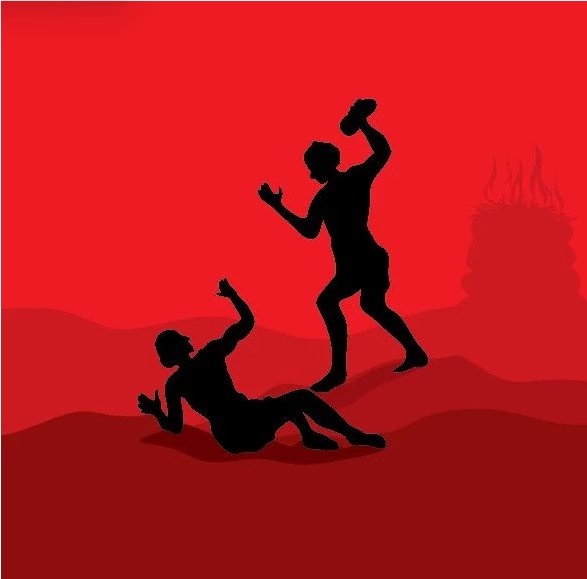
Sadly, this is not the last failing in the life of Cain.  Cain spoke to his brother out in a field and then killed him.  The text of Genesis 4 does not specifically say why he killed his brother.  However, the New Testament gives us an answer we might have supposed. “We should not be like Cain, who was of the evil one and murdered his brother. And why did he murder him? Because his own deeds were evil and his brother’s righteous.”  Cain killed his brother because of his own jealous anger.  God had warned Cain that sin wanted him.  He told him to rule over it, that is to have self-control.  So many things flash through our minds as we experience the different feelings of this life.  Anger, sadness, desire, lust, joy, exhilaration, envy, jealousy, greed, hunger, and other aspects of living in human flesh all have their potential pitfalls.  Solomon wrote that “There is a way that seems right to a man but its end is the way of death.”  Cain’s solution to his evil disobedient behavior and his brother’s righteous behavior was to eliminate his brother.  What could be wrong with this plan?  Kind of like David eliminating Uriah (the husband of the wife with whom David committed adultery and impregnated).  Cain was jealous of his brother receiving the praise of God.  This jealousy led to his lack of self-control.  The lack of self-control added another sin on top of the first one.Cain jealousy

Sobriety is often associated with alcohol or drugs.  If you are sober, many consider this to be the absence of the influence of these substances.  However, sobriety is being clear headed, self controlled, vigilant with your thoughts and actions.  It means that despite how you feel, you put yourself in the right state of thinking.  Cain failed mightily in both his offering and his killing of Abel because in neither case did he exert control over his thoughts or actions.  Cain may be a bad example of how to conduct your life, but he is an excellent example of how not to conduct your life.  Walk in obedience and self-control by the authority of God and not by your own feelings, and your life will be an offering that is pleasing to God.

Posted in Travis Main | Tagged , , , | Comments Off on The Life of Cain

Thoughts by the Fire

Thoughts by the Fire

Recently, I wrote an article entitled, “Baby It’s Cold Outside” and I discussed the occurrences of cold in the Bible.  Well, it is still cold here in Missouri (below freezing).  So, I am keeping the fire blazing to stay warm!  I want to share with you my “Thoughts by the Fire”. The scriptures speak of keeping warm by the fire.  Peter warmed himself by the fire in Mark 14:54 and the inhabitants of Melita as a show of kindness kindled a fire to warm Paul and those who had been shipwrecked (Acts 28:1-2).  Fire can be such a blessing.  I have good memories of being around it with family and friends.  I am certain that the disciples never forgot being near the fire with Jesus and sharing fish and bread (John 21:9).  Today, let’s take a gander at a few of the instances where the Bible speaks of fire.

Thoughts by the Fire

Thoughts by the Fire

The Bible itself is referred to as a fire.  Jeremiah, sharing the Word each day in a Jerusalem soon to be destroyed came to be mocked and treated poorly because of his proclamations.  He decided not to share God’s revelation anymore, however, it was a “burning fire shut up” in his bones.  Jeremiah couldn’t keep it in!  God later says through Jeremiah “Is not my Word like as a fire?”  I think the prophet would agree.

Fire was actually used to communicate in at least two occurrences within scripture.  First, Moses was drawn to a burning bush, in which an angel of the Lord spoke to him. Second, the voice of God came from fire upon Mt. Sinai with Israel fresh from Egypt camped below.  Of course, communication by fire is not the norm.  That being the case, the fact that fire can also cause great fear is not surprising.  When Israel saw and heard the voice from the fire on Mt. Sinai they were terrified and did not want to see that fire anymore for fear of death.

On the other side of fear, fire for many is a form of comfort.  When the children of Israel were led out of Egypt, by night they could see the presence of God in a pillar of fire.  You could literally say that God was their light.  Throughout all their journeys in the wilderness, God was there.  When Solomon built the temple, though it was not God’s intention for it to be built, fire came down and the Glory of the Lord filled the temple.  This caused Israel to bow faces to the ground and worship and praise God saying “For He is good; for his mercy endureth forever.”  How comforting to know that God was among them.  When the servant of Elisha was concerned about being surrounded by horses and chariots, Elisha prayed that the servant’s eyes be opened.  God answered that prayer, and the man could see the Lord’s chariots of fire filling the mountain.  Now that is assurance!  Fire is even used in the New Testament as a sign of comfort.  The apostle Paul speaks of providing food and drink even to an enemy.  Additionally, he mentions providing coals of fire (which were carried in a ceramic container upon the head) to care for that person in giving them a source to create their domestic fire.

The Old Testament speaks frequently about the fire used for the many sacrifices of Israel.  The fire upon the altar consummating the offering to God.  Outside of the camp of Israel, the sin offering of the bull would be carried and then in a clean place burned with fire.  Within and outside of the walls of Jerusalem, the fires reminded the people of God and His Graciousness toward them.  The thought of fire and sacrifice harkens back to the second mention of fire in the Bible.  Abraham was instructed by God to offer His son Isaac upon an altar.  Scripture says ”And Abraham took the wood of the burnt offering, and laid it upon Isaac his son; and he took the fire in his hand and a knife; and they went both of them together.”  Of course, God would provide another offering in this type through the sacrifice of Christ for all mankind; but what a powerful initial example to Israel about devotion to God this example sent.

The first mention of fire in scripture was used to show God’s judgment.  Due to the sinful state of Sodom and Gomorrah, God rained fire and brimstone down upon them from heaven.  God’s judgment is often shown in scripture by the use of fire.  Fire was utilized in the plagues upon Egypt.  Nadab and Abihu were destroyed with fire from heaven due to their disobedience to God.  Complaining from Israel fueled God’s anger toward them, and many were consumed by fire.  God commanded frequently throughout the Old Testament that idols and false Gods were to be destroyed by fire as well.  Significantly, Jerusalem was destroyed by the fire of the Chaldeans in 586 BC (2 Kings 25:9, Jeremiah 37:8) and it was prophesied to be destroyed in the same manner in 70 AD (Zephaniah 1:18, Luke 3:16).  Both occurrences could have been avoided if Israel would have clung to God and honored him through deeds of repentance, but they refused.  Though these earthly judgments are terrifying displays of God’s power, a greater judgment waits for all mankind.  Matthew 18:8, 25:41, and Jude 1:7 all speak of an eternal fire to come punishing those whose hearts would not turn to God.

There are many uses and instances of the word fire in the Bible.  Its impact can range from the pleasant to the horrifying.  Its flame can be a blessing or an eternal curse depending on the heart of man.  The wrath of God burns like a fire, but he will not hide it forever (Psalm 89:46).  This fiery anger of God will come upon those whose heart has departed from Him (Jeremiah 17:4-5).  Let’s let our thoughts by the fire examine whether our hearts are turning dark and cold.  May we all kindle a flame of repentance, love, and honor to God before it is eternally too late.

Posted in Travis Main | Tagged , , , , | Comments Off on Thoughts by the Fire

Eve: The Mother of all Living

Eve: The Mother of all Living

Eve was the first female upon the earth.  Genesis 1:27 records her creation in brief.  She was created in the image of God.  According to Genesis 2 she was created after the first man, Adam.  Eve was created from a rib which God took from Adam.  She was created because there was not found a help who would be a mate for Adam.  After God created Eve, He brought her to Adam.  The first recorded words Adam spoke to this female were: “This is now bone of my bones, and flesh of my flesh: she shall be called Woman, because she was taken out of Man.”  The first recorded command by God to Eve, including Adam,  was: “Be fruitful and multiply and fill the earth and subdue it, and have dominion over the fish of the sea and over the birds of the heavens and over every living thing that moves on the earth.”

The mention of Eve’s name occurs only four times in scripture.  Genesis 3:20, 4:1, 2 Corinthians 11:3, and I Timothy 2:13.  The first passage mentioning her is interesting.  Adam “called his wife’s name Eve, because she was the mother of all living.”  The reason this passage is interesting is that to this point no children had been mentioned.  Were there children already?  How could she be a mother, especially of all living, if she did not?  Additionally, what did Adam call her before she became the mother of all living?  It would not be shocking if she had a different name prior as many well known individuals in the Bible were renamed: Abram, Jacob, Gideon, Daniel, Cephas, and Saul to name a few.

Genesis 4:1 is the second passage Eve’s name is mentioned.  Adam and eve had sex and she conceived a son.  The boys’ name is Cain and Eve gives honor to God.  Was this the first child?  It is the first child recorded.  Eve and her husband were obediently following the command given by God to be fruitful and multiple.

Assuming Genesis was written by Moses by the inspiration of the Holy Spirit, the Bible does not mention Eve’s name again for over 1600 years.  In 2 Corinthians 11:3, the apostle Paul recalls a life altering event from Genesis 3.  In the garden, Eve was deceived by the serpent (The serpent is identified in Revelation 20:2 as Satan, the devil.).  The context of Paul’s usage is his concern over the Corinthian Church.  He uses the language of marriage in explaining he was instrumental in their betrothal (by baptism) to Christ.  Paul is worried that they will be deceived by others and led away from their “sincere and pure devotion to Christ”.  Paul’s comparison comes from the fact that God had told Adam in the garden that the tree of the knowledge of good and evil was not to be eaten.  This command had been shared with Eve, likely by her husband.  Rather than being devoted to him and respecting his authority and God’s, she fell to deception and ate of the fruit, and gave Adam to eat as well.

The final passage mentioning the name of Eve is found in I Timothy 2:13. The context of this passage begins with verse 9.  The apostle Paul is proclaiming in this letter to Timothy that godly women are not to be focused on drawing attention to themselves by their adornments but rather their focus should be upon good works.  They are to learn quietly and in subjection.  They are not to conduct themselves as a teacher or exercise authority over a man.  Why? “For Adam was first formed then Eve.  And Adam was not deceived, but the woman being deceived was in transgression.”  These are the two eternal reasons given.  They are given by God through the Holy Spirit to Paul and shared to Timothy.  The reminder of the woman’s role and Eve’s sin in the beginning (An eternal reminder of the need to be devoted to her husband, a given role and responsibility, not an inherited sin.) is not meant to overwhelm a woman.  As a comfort to her, she will find healing and fulfillment (“shall be saved”) in the raising of godly children (Genesis 3:16).  This was from God’s intention from the beginning: Malachi 2:15 “And did not he make one? [He Bound them like a rope with the breath of life]. And why one? That he might seek a godly offspring...”.

Although Eve is only mentioned 4 times by name in scripture, she still plays an important role in the shaping of mankind.  She was created to be a loving help to her husband.  Her role was not to lead, but to be devoted to Adam’s wellbeing.  Additionally, serving in her role she was to bring about godly offspring.  These items are what  God desired from Eve, the mother of all living,  and He still desires the fulfillment of women in this same role today.

Posted in Travis Main | Tagged , , , | Comments Off on Eve: The Mother of all Living